












FEATURE INTERVIEW
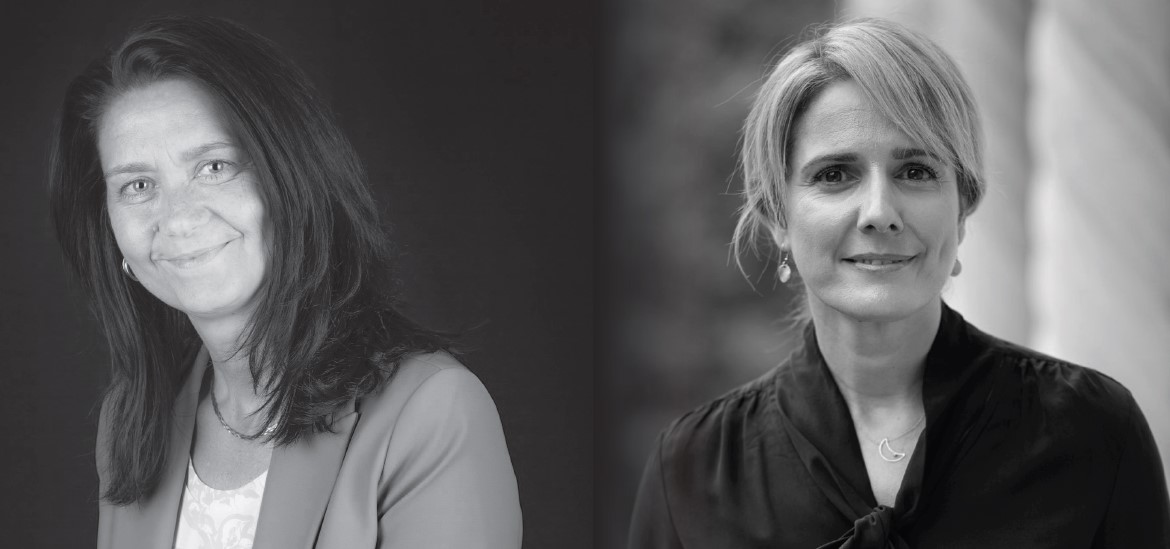
Interview with CLAUDIA BLANCO, Chief Technology Officer for Grid Automation, and CLAUDIA COSOREANU, Innovation and Customer Partnerships Officer, GE We have decarbonization as a target. We have goals established around the globe by different governments, different companies. A big part of achieving that is integrating a high level of renewable generation into the grid. Claudia Cosoreanu Alan Ross
I have two exciting guests that we’re here at DistribuTech. One of them is Claudia, and the other one is Claudia. And I am not making that up. They’re from General Electric. And first of all, let me start with you, Claudia.
Claudia, tell me a little bit about your background in the power industry and your time at GE.
Claudia Cosoreanu
I started with GE 20 years ago in the power industry as an engineer. I graduated mechanical engineering, but with automation and control as the major.
I moved into product management shortly after that. I got my MBA in marketing and today I am the CTO – the Chief Technology Officer for Grid Automation. I also lead one of the product lines.
AR
I noticed something. You wanted to save the world when you were an engineer, and then you got your MBA and you wanted to make money.
CC
I think you need to save the world and make money at the same time.
AR
Claudia, tell me a little bit about your background in the power industry and your time at GE.
Claudia Blanco
I have 25 years in the industry, but I started in automotive business, and I started in the power business twelve years ago when I joined the wind business. I was a global manufacturing director to grow the wind business onshore and offshore at that moment. Then I moved to multiple areas of advanced technology more for a global renewable business. Recently I joined Grid Solutions, in 2018, and today I am the Innovation and customer partnerships officer. I’m an industrial engineer, but I also did computer science. I’m one of those engineers that anticipate the digital world will fit well with mechanical. I did my MBA as well because I wanted to grow that business. AR
We all realize there’s a business to be made here. One of the things, two years ago here at Distributech, all you saw was IoT. One year ago, all you saw was drones. It’s not that they went away, it’s the fact that they’re being adopted, they’re being brought into the industry. I have never seen the utility industry go through as much change as it’s going through right now, which is brilliant for us. Change means need.
Another thing is that you have fewer people because we all have staffing issues. What are some of the other issues that you’re seeing as it relates to the problems, the challenges that the utility industry has?
CC
Before I get into the problems, I just want to recap what is going on. We have decarbonization as a target. We have goals established around the globe by different governments, different companies. They want to be net zero in 2030, 2035. A big part of achieving that is integrating a high level of renewable generation into the grid. The other trend is electrification of transportation and industry. You see that being pushed. So first, at the distribution level, there are more distributed energy resources integrated many times without the utilities even knowing that they’re coming. And that becomes difficult for the utilities because they can’t operate the grid without having visibility. For transmission, you do have renewable generation integrated onto the grid. And what that does, because they are variable and intermittent, they create grid stability issues.
Another problem that needs to be solved is because of variability and intermittency. Now you need to be a lot faster with the controls, and digitization and automation are two big problems that need to be solved. And then grid resiliency. As you have extreme weather events or cyber attacks, you need to be able to recover very quickly, so that you minimize the impact on customers, and how many customers are impacted. AR
That was really good. Can you add anything to what Claudia has just said, Claudia?
CB
Something that is very important is to make sure we understand what other problems are to be solved. For what we call the grid of the future, what is now is happening now. To do that, as Claudia said before, we needed to do research, listen to our customers, listen to the industry. That helped us identify those problems that help us prioritize and be complementary to the strategy we were putting in place. We prioritize based on urgency and scalability, because we cannot solve a problem that is just a problem for a place, for a region, for a customer. And collaboration is so important because we think we are ready to collaborate and we are not, right? Collaboration means that, to solve big problems we are going to have soon, we need to do it in partnership.
We talk to our customers and involve them in selecting how to solve those problems. The complexity of that is that if we have a problem, we have multiple ways to solve it, but which one is really the most efficient? AR
We already have the problem that the utilities in the United States to a large extent cannot share information by law. Now we’re saying to them, share information. So we’ve got a lot of change going on, policy changes, the IRA spending billions of dollars, the inflation Reduction. Those are the problems that are exactly what you’ve just said. Now what’s the solution?
CC
There is no one solution. To comment on what you said, I think there are silos and we cannot have utilities do different things. But the reality is that they will. The grid will evolve depending on the specifics of the region, of the country, of the utilities. It will depend on the government regulations, on the market design. There’s a lot at play here that will influence the way utilities adopt some of these technologies. But one solution is digitization and automation. In order to do everything that we want to do with the renewable integration into the grid, while you do that you want to keep the grid stable, you want to keep it reliable. You need to have eyes on the grid. So you need to have as much information from the grid as possible so that you know at any point in time what is going on, and you do that with intelligence sensors.
What we are talking about with some of our customers is the next generation of a digital substation.
We call it next generation because we have been digitizing the substation for the last couple of years. The reality is that it’s not adopted, not at the scale that we were expecting it to be. And the reason for that is we haven’t really looked at it from an end-to-end solution point of view. It was just not compelling for our customers. We want to offer intelligent sensors as part of the solution. We want to have an integrated digital model of the network within the reach of the substation. We want to have virtualization of some of the functions so you have protection, control automation in the substation, which has its own benefit. On top of that you can add now advanced automation applications, such as wide area protection and control or dynamic system rating.
This is a solution that is flexible, but scalable, and you can apply it to solve multiple problems for utilities.
AR
One of the big problems you’re going to help solve is the people problem. Because Larry’s not sitting there anymore, he retired and they replaced him with a kid.
CC
Absolutely right. We will have a part of the full solution. We will have the machine learning artificial intelligence technology to help with decision making. Because you’re going to have more data, the human brain is actually not going to be able to process it all. We need the technology to help.
CB
You mentioned the drones, right? New technologies need to also be adopted. So how we prepare the users to adopt those new solutions as well, we cannot miss also this piece of the equation. I remember implementing new technologies like augmented reality some years ago, and we tried to implement that in the factory, just to give a specific example. People were not ready to use that. Those people haven’t even used an iPad before, so adoption is going to be something to keep in mind as well, because this is coming now.
Another thing to add to that is how important it is to combine efforts even internally because we have our digital team, we have our experts as well on the physicals, on great automation, but we also have our power conversion. Those multiple areas can add their expertise and solve the problem. If you detect a problem, how do you solve it with grid forming? Detection and problem solving is something that GE brings very well with the technologies we handle. Detection and problem solving is something that GE brings very well with the technologies we handle. Claudia Blanco AR
How have customers you’ve talked to here reacted to what you’re sharing? I love the idea of the stack, the flexibility of it, but at the same time you’re trying to create a whole. You’re not here to do pieces and parts because we’ve done pieces and parts a long time, it hasn’t worked. And the utilities are under enormous stress to adapt to all of these changes.
CC
They’re actually very interested. We do have a few customers that want to pilot the solution.
The reality is that I believe the industry is moving. As you were saying earlier, there is no better time than now. The changes are happening, I think we’re seeing that in discussions with customers. 15 years ago, it was pretty stable. I would say static. But now you see the interest, you see the challenge, you see the need and the willingness to try. What we’re bringing with this next generation digital substation is the end-to-end, because we’ve been talking about piloting virtualization, the sensors, the digital twin of the network. But when you bring it all together, it’s the true value. And the reaction has been very good. AR
You’re going to be able to create this whole end-to-end, and you’re also going to be able to have a digital version of that, right? I love that the world is changing, and they will get there.
Last question I need to ask you. Some countries, some locals can say everybody will do it this way. We are the utility, we have the power. Not so in the United States. We have 50 states regulating all of the utilities. California was one of the first to move to more performance-based rates, right. So as a result of that, they’re going to say, hey, is this going to help us perform better? Are we going to be able to keep the lights on? Are we going to be able to be resilient in the case of storms or fires or whatever? Are we going to be reliable? Can we maintain the existing old assets? Because you’re not going to change all the assets overnight. And does your system work with the old system? I think you’re going to find that people are going to take a chance to be the first and then a lot of people will be the first to be second.
Globally, what do you see for some of the barriers to adoption or some of the things? You get different geopolitical things going on. What do you see?
CB
For me, coming from Europe, listening to our customers is important worldwide because, for example, a problem of flexibility is not the same in Spain than as in the US. We were talking with one of our key customers recently, and they said, you need to understand that we are not ready for flexibility because the regulation doesn’t allow that in Spain today. But by piloting this in this area, we can demonstrate, and here we talk about proof of concept. Here is how we can help: piloting early enough, giving the value, the results, and demonstrating that the value is high enough to say that the regulation has to be adapted fast.
CC
I would add to that, especially in Europe, but we’ve seen a couple of cases in the United States as well, customers are asking us to help them put together the business case for these new solutions and to help them with their seven-year, ten-year plan to really prove to the regulators that this is the way to go. And you did mention the performance-based compensation. It is starting to spread. It started in California. There are other states that are thinking about it. Europe is thinking about it as well. There will be a move towards performance-based, there’s no longer just the rate case.
CB
Something very important I want to add to that, because it’s an amazing subject, is how funding from the government can help. Here in Europe, for example, if you want to apply for a call for a governmental funding support, they include you in the collaboration in some way. For example, if you want to work on one area of artificial intelligence, there is a call that obligates you to work with three different countries, and there are areas that you have to meet such as transition, distribution. This is helping to break the silos, as we say, but it also helps regulations to enter into the picture. I think here there are a lot of things that we could do with that kind of support.
AR
This has been a delight. Claudia, thank you so much, Claudia. It was brilliant. Thank you. We appreciate it very much.
CC
Thank you.
CB
Thank you. Share this article

Cooperation for the Power Systems of the Future: Interview with Claudia Blanco and Claudia Cosoreanu, GE Vernova

Trending Now

Power Panel Discussion with Marcel Hilgers and Ron Harper
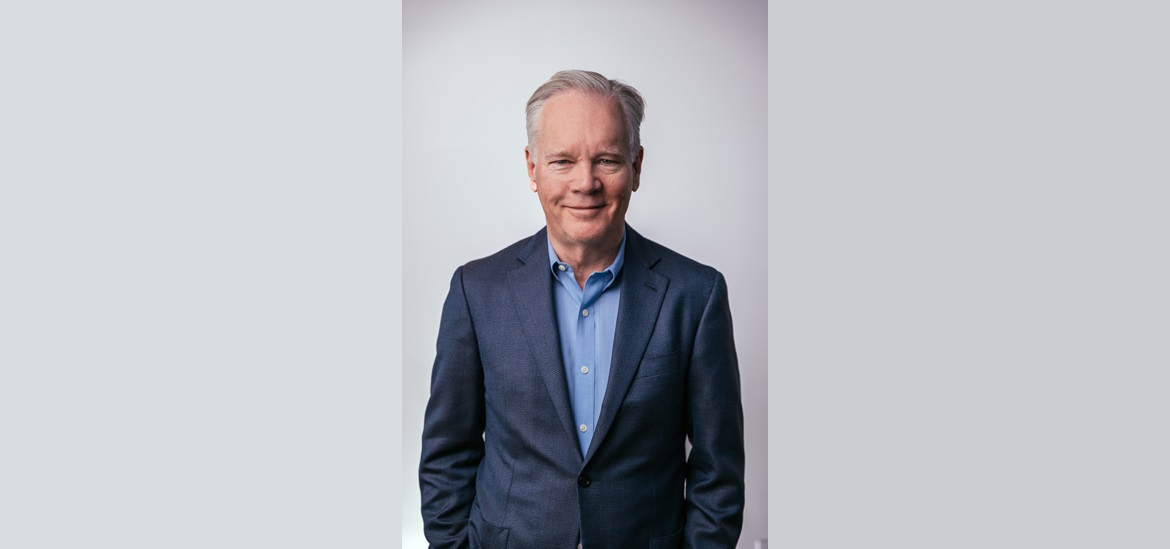
Beyond Lithium: Larry Zulch Explores Vanadium Flow Batteries and the Next Wave in Energy Storage
Robert Brusetti on How Remote Tools Have Transformed Work Dynamics
Nand Singh Unveils the Future of AI in Manufacturing
Key Technologies toward Renewable Energy