









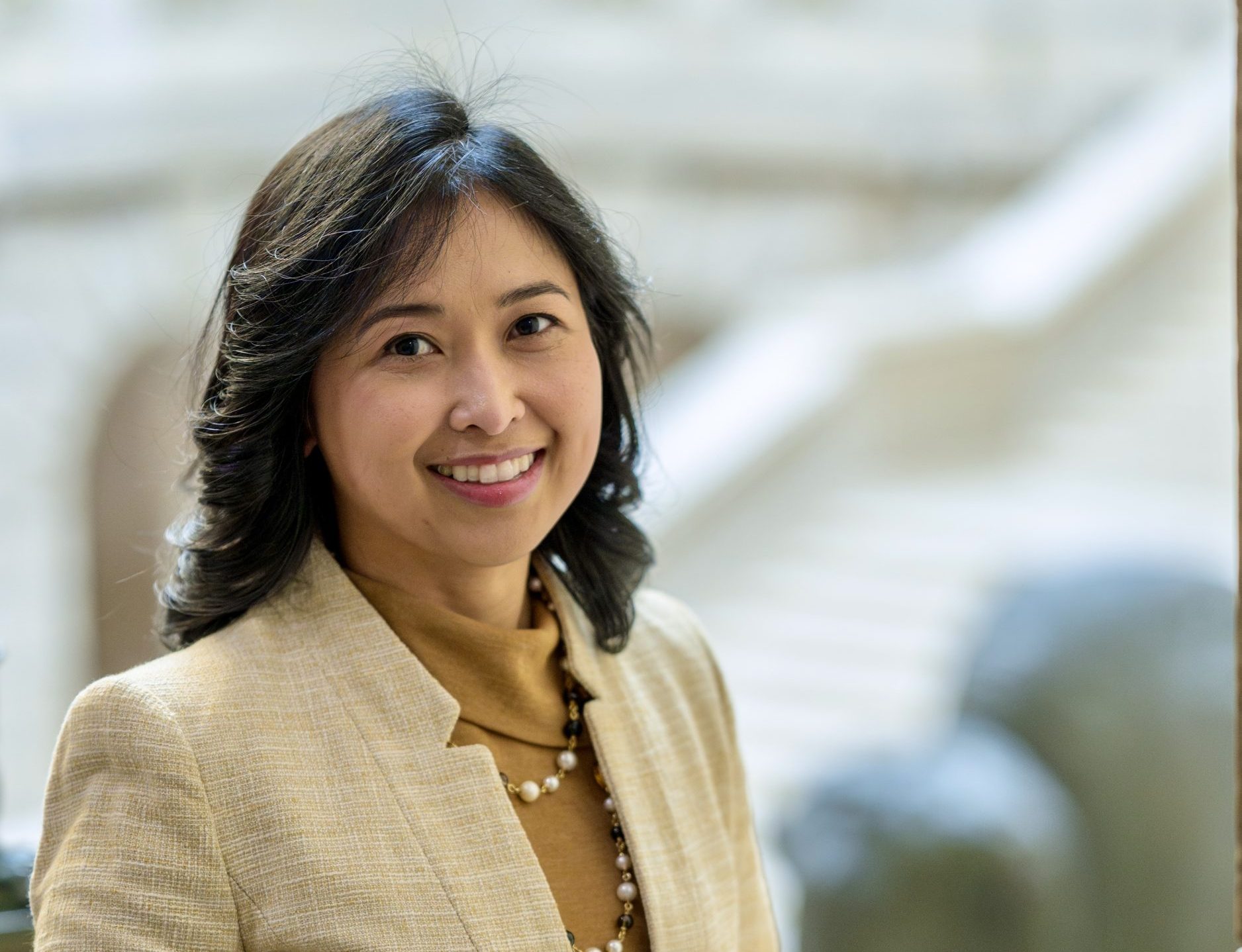

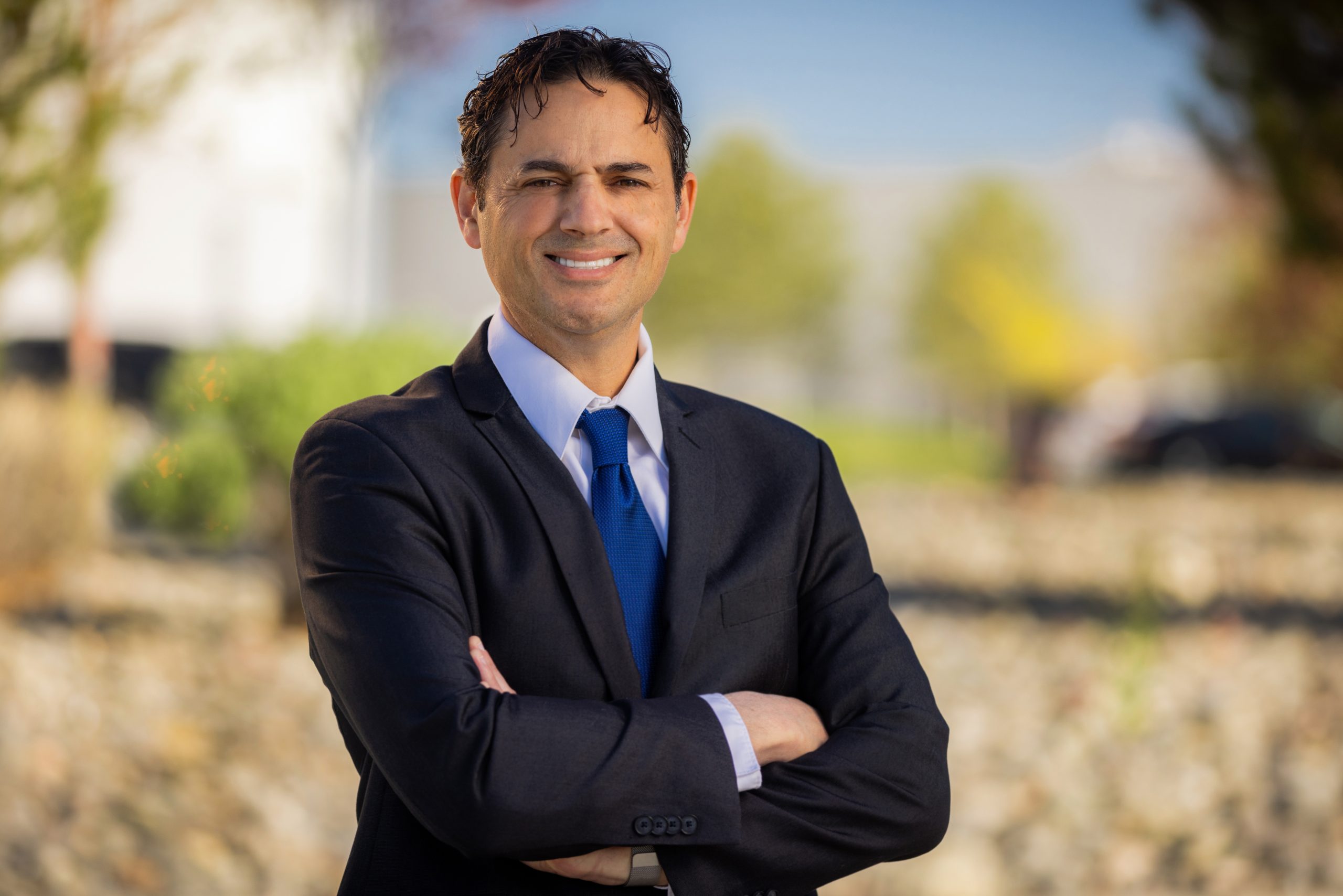





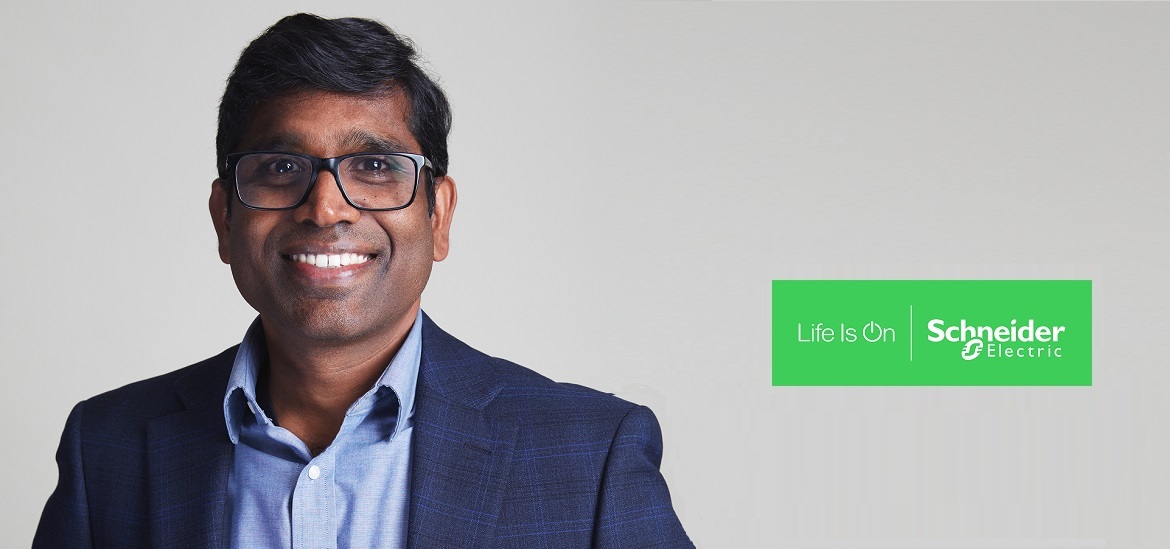
Interview with BALA VINAYAGAM
Vice President of the Microgrid Program, Schneider Electric If we truly want to transform the grid in the future, which will have a co-existence of both this decarbonized, centralized generation transmission, it also needs to co-exist with a truly decentralized, heavily distributed and highly democratized distribution at work that needs to help bring the stability that is required in the grid. Alan Ross
Hi, I’m Alan Ross. I’m the Managing Editor of APC Media, our APC Technology Productions, Transformer Technology, Power Systems Technology. We are here at the RE+ 2023 event in Las Vegas.
My next guest is Bala Vinayagam. He is the Vice President of the microgrid program for Schneider Electric.
You’ve been around this space from the utility perspective. You’ve got a PhD. What’s your PhD in?
Bala Vinayagam
It’s in electrical and computer engineering, primarily focused on long-term stability of the bulk power systems.
AR
Oh, wow. I love that. Okay, so you’re the guy. Let’s talk about what you’ve seen in the industry, not just focused on the grid part of it. We’re here and it seems like we’re at an inflection point, that we’ve crossed the Rubicon, where now we’ve got people saying, Hey, this will really work. We’ve got wind and solar and storage at scale. Now we’re starting to talk about microgrids and how microgrids can come in, from a resiliency standpoint, from a utility standpoint, and more. Talk about where we are in terms of microgrids from the beginning to where we are today.
BV
I started my microgrid journey back in 2007 when I was working for General Electric. At the time, it was more of community microgrid. These are remote communities in which you are moving diesel by truck, pretty expensive. It’s cold communities back in Canada. How do you really create power in those communities that will make them more self-reliant and reduce their dependency on diesel? That’s how the first journey for me and microgrids started. At the time we started with hydrogen, there was hydrogen, a small wind farm, then you have diesel, where you can’t run the wires to these remote communities. There are 2,000 people, for example in the Rockies. How do you really get these communities powered up? That’s where the journey started for me first. AR
Was it not also all those communities starting to be self-reliant, but they had the grid backing them up? They were always there. The grid had to be there when needed.
BV
Most of the time, it’s very difficult to run the wires to these last miles from the grid perspective. They’re probably potentially on the diesel for quite some time. It’s very expensive. One, you need to keep them powered on for all the safety-related purposes. Two, the community has been in the middle of the transition to green infrastructure, so they may not want to run on diesel. The idea was to create an infrastructure for them that is sustainable and that keeps the power on for these remote communities, and especially the underserved communities.
AR
Now, microgrids have evolved. What was the next step from those small microgrids, for example a community, a college, a residential even sometimes, they moved and they started to change in application. What was the next leap?
BV
Before I explain what this evolution is, I think we need to take a step back and really look at the traditional bulk power system. For a very long time, we had a deregulated generation environment, a bulk transmission system, and a radial distribution system in which the loads are always planned and the generations are always dispatchable. Now, we all know that this is heavily dependent on the fossil fuels. So as the industry wants to deeply decarbonize its infrastructure, then you’re going to bring in more solar, more wind. They both are not dispatchable. Now, your loads are changing. You are electrifying the buildings. You have fleet electrification, which means that loads are getting smaller with EVs. Your loads can no longer be planned. Your generation is no longer dispatchable. How do you manage this complexity that’s going to come in as we continue to deeply decarbonize? While [microgrids] allow the decentralized distributed network to produce, consume this power at the cheapest cost with proper backup and as a green infrastructure, they also provide the flexibility that will allow the grid to remain more stable when the sun goes down and the wind goes down. AR
Oh, I like that. You set the stage for where you’re going with these microgrids. But actually, that’s the problem of the whole DER revolution.
BV
Correct. If we truly want to transform the grid in the future, which will have a co-existence of both this decarbonized, centralized generation transmission, it also needs to co-exist with a truly decentralized, heavily distributed and highly democratized distribution at work that needs to help bring the stability that is required in the grid. This is where multiple different tools need to come together from our toolkits to make that grid stability because base load generation will no longer exist.
What happens when the sun goes down and the wind goes down? Something needs to come up. We need a lot of different things. Okay, now how do you now look at demand response programs? How do you look at demand-side flexibilities? The microgrid brings in a variety of different outcomes that’s almost like a Swiss Army knife. A lot of weather events are happening. No matter how much you harden the grid, you can’t harden it against a weather-related event. I need to have a resilient backup of the power, number one. Two, the cost of energy is going to keep going up.
As you continue to decarbonize the grid, and even if the cost is going to be low, I think there is an element of the transmission and the delivery charges that is going to come and sit in terms of increased electricity cost for all of us, which means that we need to take control of that. I’ll give you an example of why I’m a very strong advocate for it from my personal story perspective. The third one, when you build these outcomes of reducing the cost, bringing the resilience, you need an infrastructure that needs to be decarbonized. That’s where microgrids come into play. While they allow the decentralized distributed network to produce, consume this power at the cheapest cost with proper backup and as a green infrastructure, they also provide the flexibility that will allow the grid to remain more stable when the sun goes down and the wind goes down.
AR
Where does storage fit in all of this?
BV
In my opinion, storage is the most important enabler of what this is going to look like. Simple example, you can have solar. Now, we are all very familiar with this. No more is it a duck curve. It’s more like a valley, actually. The head of the duck is probably becoming much longer, or probably even steeper now. Thinking about that, with the NEM 3.0, the new regulation that’s coming in from curtailing this excess solar when the price goes negative, what are you going to do with all these green electrons now? These green electrons need to be stored, why should it go to waste? This is when the storage comes into play. I think having storage as a part of the solar infrastructure, the wind infrastructure, helps us to address a variety of needs that potentially need not be addressed by bringing in peaker plants that someone like Ercat is paying at $5,500 per megawatt hour. You can bring this cost down considerably by having storage as a part of the portfolio. AR
Some of the storage things we’ve seen here, upstairs at this event, the flow battery storage, the utility scale storage is really happening faster and faster. There’s a company that uses vanadium. That’s a very plentiful resource. It’s like copper.
There are solutions that are coming on at scale which allows wind and solar at scale to be able to support the grid. Smart grids for industrial, commercial, talk a little bit about where they play, because the industrial commercial people that we talk to are afraid that they’ll be left behind. Everybody’s worried about Mrs. Jones getting her power and the guy getting his solar in his car and et cetera. And you’re saying, Look, we are the backbone of America, the industrial, the petrochemical industry, everything. We got to make sure we get smart power and good power and quality power. You’re seeing the move to microgrids in that area. Are you all seeing that?
BV
I do, actually. I see the commercial industrial in multiple folds. I see them as part of the retail, real estate, logistics as one area, office buildings included in that. How do you now look at this commercial infrastructure and how do we move this commercial infrastructure from being these buildings on concrete, or the loads on concrete, to generation on concrete? What can we do to make that happen? That’s one.
Then two, I see the light industrial customers and the heavy industrial customers, now they need to move this energy and take control of it. These PPAs that are going to come in place are probably going to increase in cost because of utilities. They need to maintain the cost of the electricity at a lower level while making sure that the electrons they’re buying are green. This is where I think the microgrid will come in and help them in terms of ensuring that, one, they take care of their Scope 1, Scope 2 emissions. Plus, whatever product that they are making, it is a Scope 3 for someone else. This is an exciting time for these guys.
One, I want to take control of my destiny in terms of the power that I am going to produce, consume. Two, making sure that I don’t miss out on the regulatory environment when it comes to this compliance declaration. Now, I think it was yesterday, there was a regulation that was passed by California that every corporate company needs to declare their Scope 1, Scope 2, Scope 3 emissions. What’s the best way for these companies to now address that part is exactly that. Whether you are a smaller player or a bigger player, you need to take control of your electrical infrastructure needs, your electrification needs, which comes with a lot more of self-reliance if you are producing and consuming that power, at the same time even participating in the grid to sell that power.
AR
It’s brilliant. Everything’s changing and it’s all changing for the good. Last but not least, Schneider Electric. What is it that you bring into the microgrid world?
BV
Again, Schneider is very heavily focused on enabling two things. One, digitizing customers’ infrastructure. You got to first digitize this infrastructure for them to understand where their needs are. We are heavily entrenched in helping the customers digitize their infrastructure, help them become more self-aware, or create the situational awareness of their infrastructure’s Scope 1, Scope 2, Scope 3 emissions. Two, we help customers build their infrastructure that allows them to produce, consume, and export power. We help customers in terms of their energy management needs. We help them modernize their electrical distribution infrastructure. We help them modernize the bridge between the IoT, the OT, and the IT structure. We help these customers to connect them to the enterprise network. Thereby this decentralization and the democratization of the infrastructure can happen, and the electrification of the buildings and the electrification of the fleets becomes a reality.
AR
Excellent, Bala, thank you so much for sharing with us this.
BV
Thank you for having me. Share this article

Revolutionizing Energy Resilience: Interview with Bala Vinayagam, Schneider Electric
Trending Now
Interview with Gordon Atamanchuk, President & CEO of Micro Tool and Machine Ltd. (MTM)
Strategies for Grid Resilience: Gerhard Salge's Vision for a Sustainable Energy Future
Robert Brusetti on How Remote Tools Have Transformed Work Dynamics
Advancing Battery Technology, Grid Resilience, and Sustainable Energy Solutions
SPECIAL SECTION: Insights from TMAA