































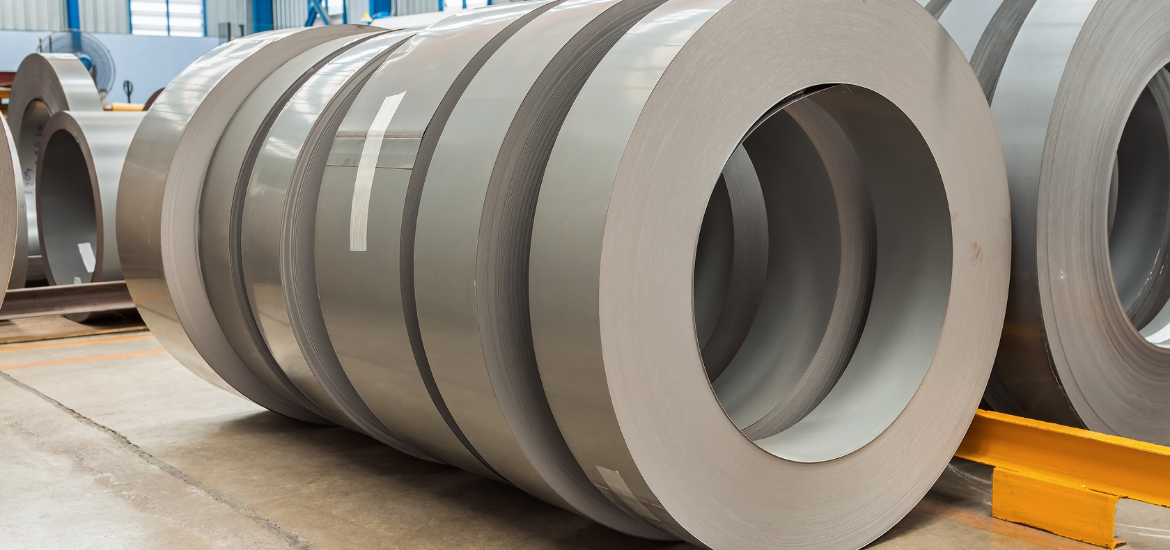
Power Grid Revolution: Advanced Transformer Technologies Light Up North America Although it is ill-advised to engage on multiple fronts at once, the North American power grid has successfully managed to be in that exact state in 2024. Not only are network operators having to catch up in their renewable energy integration, but demand is actually increasing with electrification of everything from cars to datacenters needed for chatbots. This has put additional reliance, and at times scrutiny, on a major component required to transmit and distribute electricity through our networks, the transformer. Thankfully recent advancements in materials and designs are poised to revolutionize this vital grid component, a few of which we’ll go over here. Although not a new topic, due to its relevance in 2024 we wanted to talk briefly about amorphous steel. Grain-oriented electrical steel (GOES) which has been widely used in transformer cores for nearly eight decades has a competitor in that of amorphous steel. This not-so-new technology possesses excellent magnetic properties and already contributes to high-efficiency electrical motors; this has yet to materialize at scale for transformers. Much of this is due to the nature of the industry adopting new technologies slowly but the Department of Energy (DoE) kicked off the year with a long-anticipated regulation to force producers to make amorphous steel transformer cores in nearly all applications. Although well intentioned, the timing couldn’t have been worse given the current supply constraints that have persisted since last summer. PTR does not anticipate that this environment will lead the DoE to change its proposed a rule to switch from GOES to amorphous steel in transformer cores. The new ruling has extended the timeline to 2029 on only 25% of installations rather than nearly all installations as before. With only Metglas Inc. out of South Carolina currently producing amorphous steel there will nevertheless be significant investment in this technology over the next years. In that time, more studies on use of amorphous transformers in the field would help many utilities to try it out earlier than later. Increasing Silicon with Additive Manufacturing As amorphous steel production is pushed back, an entirely new method is coming closer to reality. Electrical steel is often referred to as silicon steel due to the presence of silicon (Si) in its composition. Usually less than 4% by weight, having a higher Si content is favorable for increasing resistivity and improving soft magnetic properties, fabrication of transformer core with higher Si containing electrical steels is difficult by conventional wrought processes due to an increase in its brittleness. As such, applying novel processes such as additive manufacturing can provide a plausible way to fabricate transformer cores with higher Si content and unique design features. One study published this month was able to create steel with 6.5% Si content1 and another with a core capable of 10kVA2. Applying novel processes such as additive manufacturing can provide a plausible way to fabricate transformer cores with higher Si content and unique design features. Rethinking the Insulation Equation Dielectric fluids, the insulating and cooling agents within transformers, are undergoing a critical re-evaluation. Traditionally, mineral oil, derived from crude oil, has been the industry standard; however, concerns regarding its environmental impact and fire risk are prompting a shift towards esters, both synthetic and natural. There have been some limitations though as Synthetic esters availability is currently limited while Natural esters, replace one environmental concern with another, deforestation. A key aspect to switching lies in minimizing additives in these dielectric fluids while maintaining their ability to serve as diagnostic tools through Dissolved Gas Analysis (DGA), an important health assessment method. Diamonds Are Paper’s Best Friend Traditional Kraft (TUK) paper has been around since 1920 and recently we’re seeing scaling on either new alternatives or coated versions of this paper. These new designs offer up to a 10°C increase in thermal class, leading to a significantly extended transformer lifespan. This translates to increased power handling capacity without footprint or weight increase, making it ideal for space-constrained applications. A few manufacturers such as Wiedmann with its Diamond pattern-enhanced cellulose (DPE) apply resin in a diamond-shaped pattern and DuPont with Nomex which it developed in the 1960’s are behind some of these breakthrough applications. The current supply-constrained market provides a fantastic opportunity to accelerate and even implement some of these technologies for those that were sitting on the fence until now. Only a Few Technologies of Many As you can tell, we were only able to focus on a few of the steel and insulation technologies which themselves just represent a few of the many fronts in R&D for this single but important actor in our power grid. For all of these technologies, the current supply-constrained market provides a fantastic opportunity to accelerate and even implement some of these technologies for those that were sitting on the fence until now. As a third-party market observer, PTR has found these recent trends have been fascinating to behold and we’ll do our best to stay tuned to these developments. Mike has 16 years of market research experience designing numerous research practices from scratch while leading over 50 bespoke projects with Fortune-500 companies. In 2016 he co-founded Power Technology Research (PTR) and has since launched new research practices in solar, storage, battery, and e-mobility. In addition to building and growing partnerships, he currently focuses on research around regulation and de-carbonizing efforts. In 2020, he co-founded Matos, an intelligence automation company focused on providing powerful AI-driven tools for the market research sector. In 2023, this business was acquired by PTR. Prior to founding PTR, he spent 8 years with iSuppli /IHS Markit in various analyst and consulting roles where he covered a broad range of sectors including mobile, renewable power and electricity transmission and distribution (T&D). In his last role, he led the power technology consulting group. He is an expert on the PV industry and having performed numerous competitive dynamics and opportunity assessment projects, covering upstream, downstream, and supply chain topics. In 2008, he obtained a Bachelor’s of Science in both Financial Services and in Corporate Finance from San Francisco State University. This article was originally published in the August 2024 issue of the Power Systems Technology magazine, which you can access here .
To download the PDF version of this article, click here .

Power Grid Revolution: Advanced Transformer Technologies Light Up North America
Popular Categories
Trending Now
Asset Managers and Technical Experts: Divided by an Uncommon Language?
Building a Scalable Transformer Services Business – Critical Elements of Success

Shaping the Future of Industrial Maintenance: Generative AI, Condition Monitoring, and the Rise of the Citizen Maintenance Worker
The Sen Transformer
A successful transition to green energy emphasizes transformer maintenance and reliability