



















FEATURE INTERVIEW
Interview with DIANE CHERRY
Principal Consultant at Diane Cherry Consulting Long duration energy storage (LDES) is really going to be a gamechanger. Alan Ross: My guest today is Diane Cherry. Diane is the principal consultant at Diane Cherry Consulting, a woman-owned small business providing environmental and energy services in the areas of business development, policy and regulatory analysis, and communications. Diane, thank you for joining me today.
Diane Cherry: I’m delighted to be part of your conversation.
AR One of the things that intrigued me about you, Diane, is how involved you are in energy policy, regulation, and how they connect to green, clean energy, which is what I’d like to talk about today. But first of all, could you tell me how you became a policy consultant?
DC I’ve been in this field for about 25 years. My education was in economics, and after college, I worked for a non-profit research organization in Washington, DC. called Resources for the Future (RFF). RFF champions the application of economics to energy and environmental policy. Congress passed the Clean Air Act Amendments of 1990 while I was at RFF, and I had a chance to witness economic incentives at work in the acid rain provisions of that law. That’s where my interest truly began, and it has only grown over time.
I got my master’s degree at Harvard, then I moved to Washington D.C. for a while, worked at EPA, and I’ve been in North Carolina for the last 25 years working on energy and environmental issues in the Southeastern United States. Energy is important to our lives each and every day. The work has changed immensely over the years and it always piques my interest. AR I would like to address an issue with you: Clean and green energy have been used a lot of times interchangeably, right? What is the difference between clean and green?
DC There is a big difference and I think you’re right, people do use these terms interchangeably. Clean means emissions-free, however resources might be limited or have some negative impact. Green energy, on the other hand, refers to energy that is good for the environment, with no emissions, and relies on renewable resources.
• Nuclear technology is clean but not green. Nuclear processes produce emissions-free energy, but use finite resources and also produce toxic waste that has to be handled.
• Solar and wind, on the other hand, are clean and green because they’re both emissions-free and utilize abundant renewable energy.
• Hydrogen as a fuel doesn’t directly produce emissions so it could be considered clean. But if it’s produced using fossil fuels, for example, as it is in most cases now, that’s not considered green. That’s why we have the distinction of green hydrogen, which is produced via processes powered by green, renewable energy and blue hydrogen which is produced using fossil fuels.
• Biomass is not clean or green, but it’s often marketed as such and falls under a concept that you might have heard of – greenwashing. Burning wood pellets, for example, produces emissions. Wood pellets reduce some greenhouse gas emissions in the atmosphere but they don’t reduce CO2 overall. That’s why you can’t really have a single key solution to alleviate climate change. You need a holistic approach, reducing emissions and other pollution across the board, utilizing renewable resources, and also taking steps to eliminate carbon and other pollutants that already exist in the environment.
AR You’ve seen a lot of policy decisions. Where do you think policy positively or negatively impacts technology and vice versa?
DC Policy is a huge technology driver but it is most effective when it is a mandate as opposed to just a target or goal. Unlike a binding law, an Executive Order passed by the President or a Governor does not have the same market push. For example, North Carolina just enacted a new law, House Bill 951: Energy Solutions for North Carolina. It requires a 70 percent carbon emissions reduction by 2030 and carbon neutrality by 2050. This is the first carbon mandate in the Southeastern United States and will serve as a market signal to clean energy developers that North Carolina wants and needs clean energy technology.
Consider a Renewable Energy Portfolio Standard as another example. The REPS, as it is called, may have a set aside or a requirement for renewable-powered electricity. It indicates a state’s interest in green technologies and drives green investment and development. North Carolina is the fourth largest in solar capacity in the country. Key favorable laws and policies over the past two decades spurred solar’s success. These include generous interpretations of the federal Public Utilities Regulatory Policies Act of 1978, a now expired 35 percent renewable energy tax credit, and a renewable portfolio standard like I just mentioned. AR Could you tell me where you see traction on green energy development? Places where you can say that’s working. Some would say California is working, but there are times when it’s not, like when it’s been raining for weeks.
DC The American Clean Power Association, which is the association that includes energy storage, solar, wind, and transmission developers, has a new graph that shows all the renewable energy projects currently planned across the U.S. It shows where certain technologies are thriving. Offshore wind, for example, is going gangbusters in New England. We just had our first offshore wind project in Virginia, and we have two planned in North Carolina, but we don’t have the cluster of projects that are in the New England area.
Energy storage is prevalent in California, which should be no surprise given that they have the most far reaching clean energy laws in the country. California must have some way to match the reliability and variability in their renewable energy generation and that is precisely what energy storage does. So if you look at the graph, you’ll see a proliferation of energy storage in that state.
Virginia and North Carolina have a preponderance of utility scale solar projects. I already discussed North Carolina’s history of solar support, and Virginia passed the Virginia Clean Economy Act in 2020 which got them started. Virginia is home to technology companies such as Facebook and Google which demand that their operations be supplied by 100 percent renewable energy.
Texas deregulated their electricity system back in the 1990s, which forced power plant owners to compete based on who could offer the lowest price. As wind and solar plummeted in costs they gained an edge on older fossil fuel plants. Texas also has the strongest onshore wind in the country and some of the brightest sun. So their renewable energy success is part market structure and part geographic advantage.
As costs level out over time, there will be less geographic variability across the United States in terms of which regions specialize in what clean energy technologies. But the ACP map does indicate where things are going. The Midwest still has a ton of legacy fossil fuel plants, so they don’t quite have the proliferation of green energy like the rest of the country. Consider a Renewable Energy Portfolio Standard as another example… It indicates a state’s interest in green technologies and drives green investment and development. AR If I were investing in the future of clean or green energy, or both, where would you suggest that I put my money?
DC Long duration energy storage (LDES) is really going to be a game changer. And by long-duration energy storage, I mean 10 hours of stored energy. Right now energy markets are focused on short term applications. Short term lithium ion batteries with a 4 to 6 hour duration have dominated the market to date, driven in part by the automotive industry trying to develop competitive batteries for electric vehicles. But that’s not enough duration to allow green energy to disrupt natural gas peaker plants, which have replaced coal to provide dispatchable power at peak times.
Utilities across the country are developing their Integrated Resource Plans or IRPs, looking at the generation portfolio for the next 10 to 20 years, and they’re getting rid of coal as it is completely uneconomical. As those assets are retired, then, where should we invest our energy? We ideally want an investment in green technology, but that will require LDES. Energy storage batteries require mining lithium, cobalt, or other minerals, which presents challenges. The U.S. only has one large lithium mine in Nevada, and it’s less than 5 percent of the world’s supply of lithium. We need to do more to ensure a supply in the U.S. So coming up with what the disruptive long-term energy storage technology can be, whether it is lithium-ion, whether it’s something like sulfate, whether it’s something entirely different, that’s going to be, in my mind, the game changer.
The next game changer I see is green hydrogen. There are not a lot of commercial projects to date, but if three things are addressed it will be a great technology for our energy transition. First, projects need to have binding offtake agreements. Second, green hydrogen projects must have access to low cost, high load renewables. And finally, transportation and distribution infrastructure needs to be developed. Connecting supply and demand with transportation access is exceedingly difficult. A final question that could make a huge difference is deciding what to do with baseload power. Germany is getting rid of their nuclear facilities in the aftermath of the Fukushima disaster.
In the United States we’re extending our nuclear facilities from the recommended 60 years to 80 years. Some at the Nuclear Regulatory Commission have even recommended extension to 100 years. But what do we have in place already? What are we going to do for baseload power? And I think that is the most interesting question in European countries as well as the United States.
AR Diane, this has been not just informative, but brilliant. Thank you so much for taking the time to discuss these important topics.
DC It was great. I enjoyed it. Thank you so much for having me, Alan. Share this article

Clean and Green Energy Gamechangers
Popular Categories
Trending Now

Conquering the Transformer Shortage

Interview with Maria Lamorey, PPG Commercial Manager for General Finishes
Nand Singh Unveils the Future of AI in Manufacturing

Women in Power Systems: Insights from Julie Wallin and Suzanne Stauduhar
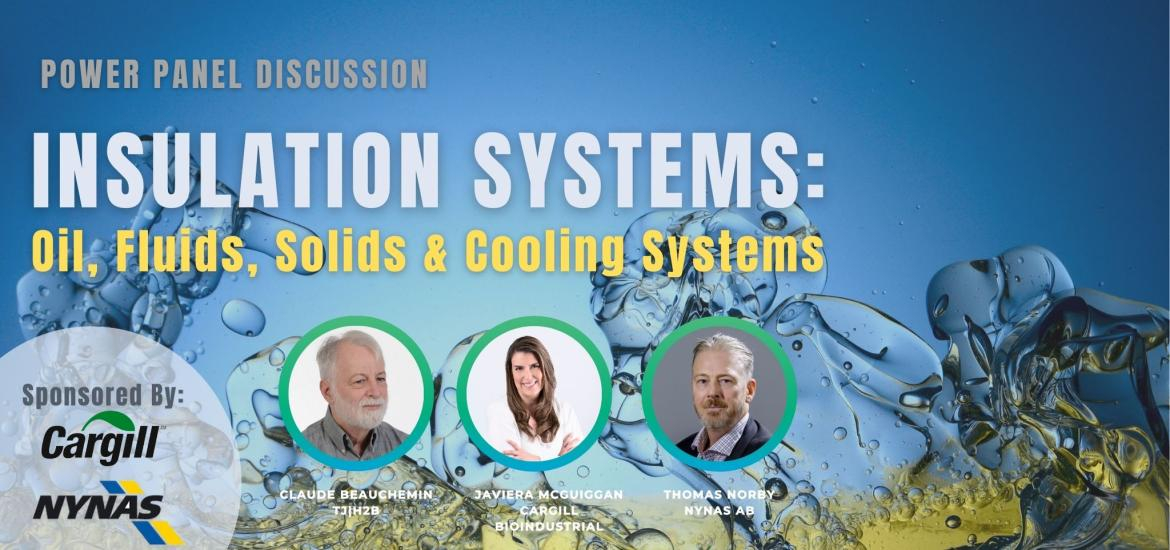
Power Panel Discussion: Insulation Systems - Oil, Fluids, Solids & Cooling Systems